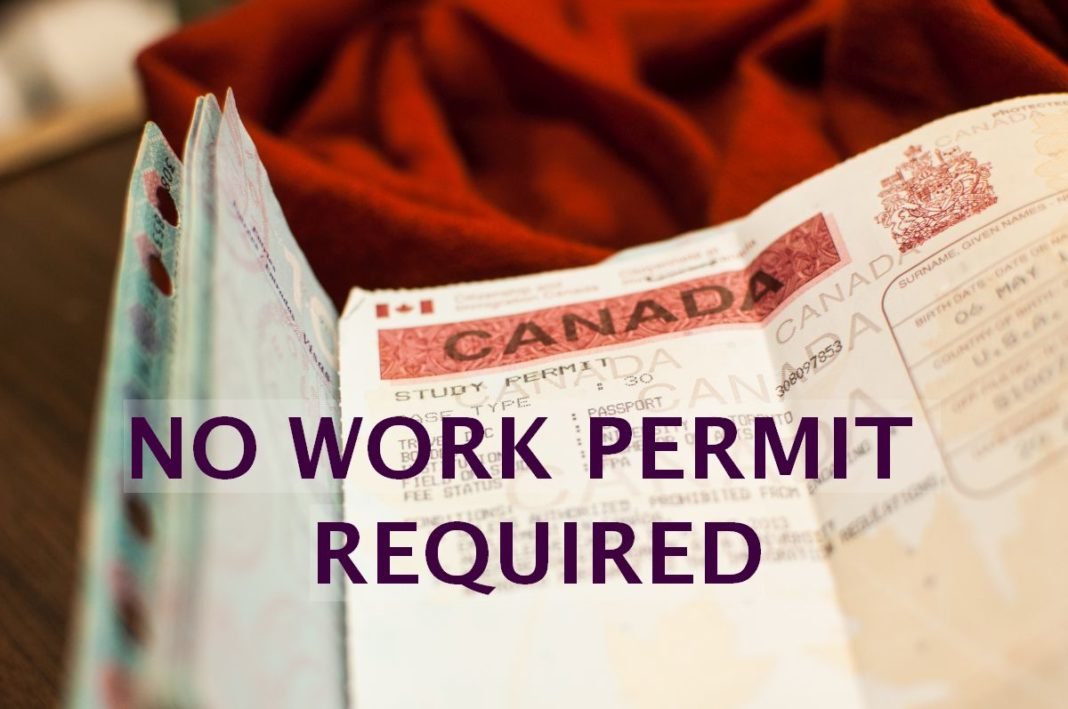
Toronto is calling, and it’s willing to pay up to $50,000 in Visa sponsorship job opportunities. Canada’s largest city is facing a historic labour shortage that is pushing employers to look beyond borders. With a population of over 6 million in the Greater Toronto Area and an economy powered by finance, technology, healthcare, and construction, Toronto offers foreign workers something rare: a clear legal pathway to work, live, and eventually become a permanent resident, all while earning $50,000 CAD or more per year.
If you’ve been searching for a realistic, structured route to a better life in a first-world country, this guide is exactly what you need. We break down the jobs, the visa pathways, the money, and the step-by-step process of landing a $50,000 CAD role in Toronto as a foreign national.
Why Toronto Is One of the Best Cities in the World for Foreign Workers
Toronto consistently ranks among the top cities globally for quality of life, multiculturalism, and economic opportunity. Over 51% of Toronto’s population was born outside of Canada, making it one of the most diverse cities on earth. That diversity isn’t just cultural: it’s embedded into the workforce, the hiring culture, and the city’s identity.
Here’s why Toronto stands out for international job seekers:
- Strong labour demand: Canada needs over 1 million skilled workers by 2026 to fill critical gaps across healthcare, trades, IT, and logistics
- Legal immigration infrastructure: Canada has some of the world’s most structured and transparent immigration pathways, including Express Entry, the LMIA process, and Provincial Nominee Programmes
- Worker protections: Ontario’s Employment Standards Act guarantees minimum wage, overtime pay, paid leave, and protection against wrongful dismissal
- Path to permanent residency: Many work visa routes in Canada lead directly to Permanent Residency (PR) within 1–3 years
- Universal healthcare access: Permanent residents and many visa holders qualify for Ontario’s OHIP health insurance programme
- Family-friendly immigration: Spouses and dependents can be brought to Canada and your spouse may receive an open work permit
In short, Toronto isn’t just a place to earn a salary — it’s a launchpad for building a life in one of the world’s most stable and opportunity-rich environments.
What $50,000 CAD Actually Means in Toronto
Before you pack your bags, it’s important to understand what $50,000 CAD per year translates to in real, day-to-day living in Toronto.
After federal and Ontario provincial taxes, your approximate net take-home pay on a $50,000 gross salary is around $3,400–$3,700 CAD per month (approximately $2,500–$2,750 USD), depending on deductions and tax credits.
Here’s a realistic monthly budget breakdown for a single person in Toronto:
| Expense | Estimated Monthly Cost (CAD) |
|---|---|
| Rent (shared apartment or 1-bed outside downtown) | $1,200 – $1,800 |
| Groceries | $300 – $450 |
| TTC Transit Pass (monthly) | $156 |
| Phone / Internet | $80 – $120 |
| Utilities (if not included in rent) | $80 – $150 |
| Personal / Miscellaneous | $200 – $400 |
| Total Estimated Monthly Spend | $2,016 – $3,076 |
This means on a $50,000 salary, a disciplined single person can save $400–$1,500 CAD per month — while living in one of North America’s premier cities. Couples with two incomes can save significantly more. And as your experience grows, Toronto salaries in most industries scale quickly: many professionals earning $50,000 today are at $70,000–$90,000 within three to five years.
The Highest Demand Jobs That Pay $50,000 or More in Toronto
Toronto’s economy is broad and growing. The following sectors are experiencing the most acute labour shortages and are the most likely to offer visa sponsorship to international candidates:
Technology and IT
Toronto is Canada’s tech hub and home to a booming AI and startup ecosystem. Software developers, data analysts, cybersecurity specialists, cloud engineers, and UX/UI designers are in extremely high demand. Even junior-level tech roles regularly start at $55,000–$75,000 CAD.
Healthcare and Personal Support
Ontario’s healthcare system is critically understaffed. Registered nurses, personal support workers (PSWs), medical laboratory technologists, physiotherapists, and pharmacy technicians are urgently needed — and many healthcare employers are actively recruiting internationally with full immigration support.
Skilled Trades and Construction
Toronto is in the middle of a massive construction boom. Electricians, plumbers, HVAC technicians, welders, and construction project managers are commanding salaries of $50,000–$90,000 CAD, with many employers offering sign-on bonuses and relocation assistance to qualified foreign tradespeople.
Finance and Accounting
As Canada’s financial capital, Toronto is home to the Big Five banks, dozens of insurance companies, and a robust fintech sector. Roles in bookkeeping, financial analysis, risk assessment, and accounting consistently start at $50,000 and climb steeply with credentials.
Logistics, Transport, and Warehousing
Supply chain disruptions have made logistics professionals more valuable than ever. Truck drivers (Class A/D/G), warehouse supervisors, and supply chain coordinators are in acute demand — and the transport sector is one of the easiest for foreign workers to enter with employer-sponsored immigration support.
Education and Early Childhood
Ontario is facing a shortage of certified teachers and early childhood educators, particularly in STEM subjects and French immersion. Internationally trained educators with recognized credentials can find roles with school boards that offer immigration assistance.
Job Roles That Pay $50,000+ With Visa Sponsorship in Toronto
| Job Role | Annual Salary Range (CAD) |
|---|---|
| Registered Nurse (RN) | $65,000 – $95,000 |
| Personal Support Worker (PSW) | $42,000 – $55,000 |
| Software Developer (Junior–Mid) | $55,000 – $95,000 |
| Electrician (Licensed) | $55,000 – $85,000 |
| Truck Driver (Class A) | $50,000 – $75,000 |
| Accountant / Financial Analyst | $52,000 – $80,000 |
| Warehouse / Logistics Supervisor | $48,000 – $65,000 |
| Welder / Pipefitter | $50,000 – $72,000 |
| IT Support / Network Technician | $48,000 – $68,000 |
| Early Childhood Educator (ECE) | $42,000 – $58,000 |
| Dental Hygienist | $65,000 – $90,000 |
| Civil / Structural Engineer | $60,000 – $95,000 |
Salary figures are approximate gross annual figures and vary based on employer, experience, and location within the Greater Toronto Area.
How Employer-Supported Immigration Works in Canada
Canada’s primary mechanism for employer-supported immigration is the Labour Market Impact Assessment (LMIA). This is a government document that a Canadian employer must obtain before hiring a foreign worker through the Temporary Foreign Worker Programme (TFWP).
Here’s how the process works step by step:
- Employer posts the job — The Canadian employer must demonstrate they tried to find a Canadian citizen or permanent resident for the role first
- LMIA application — If no suitable local candidate is found, the employer applies to Employment and Social Development Canada (ESDC) for a positive LMIA
- You receive a job offer — Once the LMIA is approved, the employer makes you a formal written job offer
- Work permit application — You apply for a Canadian work permit at your local Canadian embassy or online via IRCC (Immigration, Refugees and Citizenship Canada)
- Travel to Canada — Once your work permit is approved, you can enter Canada and begin working
Some employers, particularly large corporations and tech companies, are also LMIA-exempt through international trade agreements like the CUSMA/USMCA (for US and Mexican citizens) or intra-company transfers. Always confirm which pathway your prospective employer supports.
The Express Entry System and the Ontario Immigrant Nominee Programme
If your goal is not just a job but permanent residency, these are the two most powerful programmes available to skilled workers targeting Toronto.
Express Entry
Express Entry is Canada’s flagship points-based immigration system for skilled workers. It manages three federal streams:
- Federal Skilled Worker Programme (FSWP) — for professionals with foreign work experience
- Federal Skilled Trades Programme (FSTP) — for licensed tradespeople
- Canadian Experience Class (CEC) — for those already working in Canada
Your profile is scored using the Comprehensive Ranking System (CRS), which evaluates age, education, language proficiency (IELTS/CELPIP), work experience, and adaptability. High scorers receive an Invitation to Apply (ITA) for permanent residency. Recent draws have selected candidates with CRS scores as low as 470 in category-based draws targeting healthcare and trades workers specifically.
Ontario Immigrant Nominee Programme (OINP)
The OINP allows Ontario to directly nominate foreign workers for permanent residency outside the federal Express Entry draw system. Key streams include:
- Employer Job Offer Stream — for foreign workers with a valid job offer in Ontario
- Human Capital Priorities Stream — draws directly from the Express Entry pool
- In-Demand Skills Stream — targets workers in specific shortage occupations
- Masters Graduate Stream — for international graduates of Ontario universities
A provincial nomination from OINP adds 600 CRS points to your Express Entry profile — virtually guaranteeing an ITA for permanent residency.
How to Find Toronto Employers Who Support Visa Sponsorship
This is where most applicants struggle. Not every job posting will explicitly say “visa sponsorship available” — but that doesn’t mean it isn’t possible. Here’s how to find the right opportunities:
Use the Right Job Platforms
- Job Bank Canada (jobbank.gc.ca) — Canada’s official government job board; many listings indicate LMIA availability
- Indeed Canada (indeed.com/l-Toronto) — filter by “visa sponsorship” in search terms
- LinkedIn — search “Toronto” + your role + “LMIA” or “visa sponsorship”
- Workopolis and Eluta.ca — Canadian-focused job aggregators
- Immigroup Job Board — specifically curated for immigrants seeking sponsorship
Target Industries Known to Sponsor
Focus your search on healthcare networks (Sunnybrook, St. Michael’s, Toronto General), construction firms, technology companies with global offices, and trucking/logistics companies. These sectors have the highest rates of active LMIA applications.
Work With a Registered Immigration Consultant
A Regulated Canadian Immigration Consultant (RCIC) can help you identify LMIA-friendly employers, review your eligibility, and guide the application. Look for consultants registered with the College of Immigration and Citizenship Consultants (CICC).
Building a Canadian-Style Resume and Preparing for Interviews
A strong application is your first foot in the door. Canadian hiring culture has specific expectations that differ from many other countries.
The Canadian Resume: Key Rules
- No photo — Canadian employers do not expect or want a photo on your CV
- No date of birth, marital status, or nationality — these are considered discriminatory to include
- Keep it to 1–2 pages — Canadian recruiters spend an average of 7 seconds on an initial resume scan
- Use action verbs and quantifiable achievements — “Managed a team of 8 and reduced delivery delays by 22%” beats “Responsible for managing team”
- Include a professional summary at the top — 3–4 lines summarising who you are and what value you bring
- Tailor every application — Mirror keywords from the job description to pass Applicant Tracking Systems (ATS)
Acing the Canadian Interview
Canadian interviewers heavily favour the STAR method (Situation, Task, Action, Result) for behavioural questions. Expect questions like:
- “Tell me about a time you dealt with a difficult colleague.”
- “Describe a situation where you had to meet a tight deadline.”
- “Give an example of a time you showed initiative.”
Also expect questions about your immigration status and timeline. Be upfront and confident — most Toronto employers in high-demand sectors have navigated the LMIA process before and are not deterred by it.
What to Do Before You Apply: A Pre-Application Checklist
Getting prepared before you start applying will set you apart from 90% of international applicants:
- ✅ Take the IELTS or CELPIP — aim for CLB 7+ (IELTS 6.0+ in each band) for most skilled worker programmes
- ✅ Get your credentials assessed — use World Education Services (WES) for degree evaluations
- ✅ Create an Express Entry profile on the IRCC website even before you have a job offer
- ✅ Build a LinkedIn profile optimised for Canadian recruiters — include “Open to Work” and specify Toronto
- ✅ Research provincial licensing — trades, healthcare, and law require Ontario-specific licensing (e.g., College of Nurses of Ontario for RNs)
- ✅ Save an emergency fund — aim for 3–6 months of living expenses before relocating
Life After Landing: What Happens When You Arrive in Toronto
Once you arrive in Toronto on a work permit, a few important steps set the foundation for your life in Canada:
- Get a Social Insurance Number (SIN) — required to work legally; apply at a Service Canada location
- Open a Canadian bank account — major banks like TD, RBC, and Scotiabank have newcomer banking packages with no fees for the first year
- Register for OHIP — Ontario’s health insurance; there is a 3-month waiting period for new arrivals, so arrange private interim coverage
- Find settlement support — free services through ACCES Employment, COSTI, and the Toronto Region Immigrant Employment Council (TRIEC) help with job search, networking, and credential recognition
- Begin your PR pathway — talk to an RCIC about transitioning from your work permit to permanent residency as soon as you start accumulating Canadian work experience
Frequently Asked Questions
Do I need a job offer to apply for Canadian immigration?
Not necessarily. Express Entry allows you to create a profile and receive an Invitation to Apply for permanent residency without a job offer, though having one significantly boosts your CRS score. The OINP Employer Job Offer stream, however, does require a valid job offer from an Ontario employer.
How long does it take to get a Canadian work permit?
Processing times vary. A standard work permit through an approved LMIA typically takes 2–8 weeks for online applications, though some countries experience longer processing. Global Talent Stream (for tech workers) offers processing in as little as 2 weeks.
Can I bring my spouse and children to Toronto?
Yes. Your spouse or common-law partner may be eligible for an open work permit, allowing them to work for any Canadian employer. Dependent children can attend Canadian public schools tuition-free on a study permit.
Is $50,000 CAD enough to live comfortably in Toronto?
For a single person, yes — particularly if you choose accommodation outside downtown Toronto or share a flat. For a family, you would need a combined household income or a salary closer to $70,000–$80,000 CAD to live comfortably without financial stress.
What is the difference between a work permit and permanent residency?
A work permit is temporary and tied to a specific employer (closed permit) or freely usable (open permit). Permanent residency gives you the right to live and work anywhere in Canada indefinitely, access social benefits, and eventually apply for citizenship. Most work permit holders can transition to PR within 1–3 years through Express Entry or provincial nomination.
Are there age limits for Canadian immigration?
There are no hard age cutoffs, but the CRS points system awards more points to applicants between 20 and 29. Points decrease progressively after age 30 and stop being awarded after age 45. Applying earlier generally gives you a higher chance of success through Express Entry.
What language test do I need for Canada?
Most immigration pathways require either the IELTS General Training or the CELPIP exam. For Express Entry, you need a minimum of CLB 7 (equivalent to IELTS 6.0 in each band) for the Federal Skilled Worker Programme.
The path to a $50,000 CAD job in Toronto is structured, achievable, and open to motivated international workers right now. Canada is not quietly hoping immigrants will come — it is actively, legally, and financially building systems to bring skilled workers in. Your job is to understand those systems, position yourself correctly, and take action. Start with your language test, get your credentials assessed, build your Express Entry profile, and begin applying on Canada’s official job portals today. Toronto is one of the most welcoming cities on earth — and there’s a role in it waiting for someone with your skills.